
How AI is Transforming the Automotive Industry
Artificial intelligence (AI) is radically reshaping the automotive market, bringing innovations in personalization, predictive maintenance, and improved driving experiences that enhance both safety and convenience.
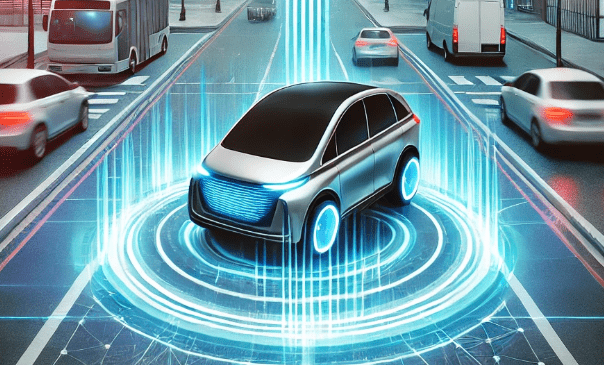
1. Personalization of the User Experience with Artificial Intelligence
To begin with, AI enables vehicles to personalize settings based on driver preferences, adapting features like navigation, seat configuration, and climate control to create a comfortable, user-friendly experience.
- Voice Assistants: Moreover, AI-driven voice assistants simplify the interaction between driver and vehicle, providing hands-free control over navigation, infotainment, and other key functions.
- Custom Infotainment Systems: Additionally, AI tailors infotainment options to each user’s preferences, enhancing enjoyment and satisfaction during travel.
2. Predictive Maintenance for Mechanical Issues
Furthermore, predictive maintenance is another area where AI excels, reducing the likelihood of unexpected repairs and, consequently, lowering maintenance costs by addressing potential issues early.
- Sensors and Diagnostics: For instance, sensors monitor essential vehicle components, allowing AI to detect wear and alert drivers for timely repairs.
- Cost Reduction: This proactive approach not only prevents high repair costs but also minimizes downtime, which is particularly valuable for fleet managers.
3. Enhanced Driving Experience and Safety
In addition, AI has revolutionized driving experiences through advanced assistance systems, making driving safer and more efficient by automatically adjusting speed, braking, and lane positioning when necessary.
- Collision Prevention: With sophisticated sensor technology, AI can detect nearby obstacles and prevent collisions by applying the brakes when needed.
- Traffic Awareness: AI also enables vehicles to recognize road signs, adjust to speed limits, and respond to environmental conditions, significantly improving safety.
- Smart Navigation: Furthermore, AI-enhanced navigation provides real-time traffic updates and learns driver preferences, offering optimized routes for time and fuel efficiency.
4. Autonomous Driving: The Future of Transportation with Artificial Intelligence
Looking forward, autonomous driving promises to transform transportation as we know it, with companies like Tesla and Waymo pioneering advancements toward fully self-driving vehicles.
- Levels of Autonomy: Although full autonomy remains a goal, many vehicles now achieve level 3 autonomy, capable of handling certain functions independently under driver supervision.
- Impact on Logistics: Autonomous driving could, in the long term, revolutionize logistics and public transportation, increasing efficiency and reducing operational costs substantially.
In summary, artificial intelligence is undoubtedly revolutionizing the automotive market, transforming how vehicles are manufactured, operated, and maintained. Personalization of the user experience, predictive maintenance, and advancements in safety and driving experience make AI a powerful ally for the industry and consumers alike.
As vehicles become increasingly independent and intuitive, drivers can expect a safer, more economical, and efficient experience, redefining what it means to own a car.
Technology continues to advance, and the automotive market is well-prepared to adopt further innovations in the coming years.
